
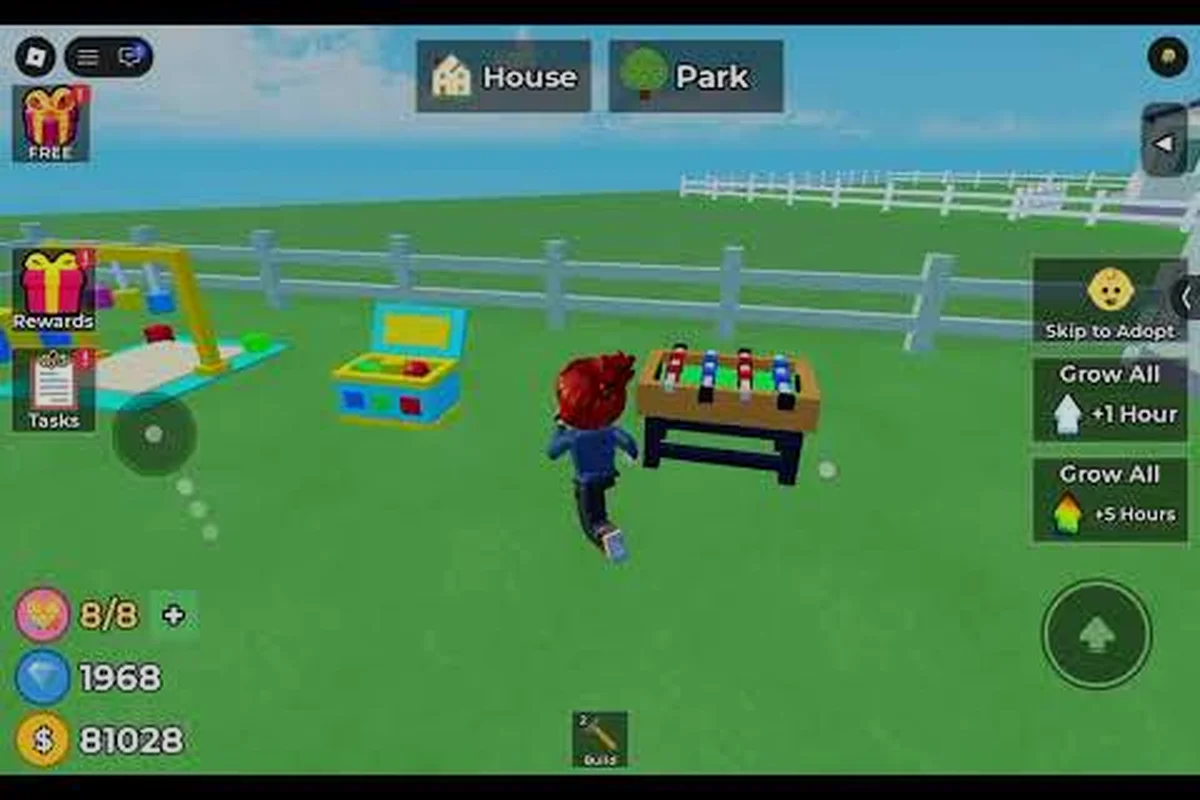
Raise The Biggest Family roleplay guide planning turns a shared Roblox server into a memorable story when everyone has a clear role, objective, and reason to cooperate. Coordinate an 18-player household, make new friends, and create playful family adventures that keep everyone involved.
What Makes This Roleplay Guide Work for Friends?
The best Raise The Biggest Family roleplay guide centers on character relationships rather than forcing every player to complete the same task. Assign each person a distinct perspective, then connect those perspectives through small household goals. A coordinated breakfast, birthday surprise, neighborhood rescue, or family talent show can become more memorable when each player contributes something different.
A strong friends session begins with a shared premise. Decide whether the group is starting a new home, caring for a newborn sibling, running a family business, hosting relatives, or solving a minor neighborhood mystery. The premise matters because it gives players a reason to speak to one another, ask for help, and make decisions without relying on constant commands.
| Group element | Recommended decision | Why it helps |
|---|---|---|
| Shared premise | Choose one household challenge | Gives every player a shared goal |
| Player roles | Pick one primary family role | Prevents duplicated characters |
| Session length | Plan one short chapter | Supports flexible schedules |
| Activity count | Select two or three activities | Keeps the group moving |
| Story ending | Choose one shared payoff | Provides a satisfying conclusion |
This Raise The Biggest Family play with friends approach works because clear boundaries create more creativity. For example, one person can act as the practical household organizer, another can be the playful younger sibling, a third can handle food, and the remaining players can contribute decorations, music, childcare, or guest management. Each role supports the family without taking every task away from someone else.
Set the Family Roles Before Starting
Ask everyone to claim a role that feels natural to them. Players who enjoy organizing can coordinate chores, while more imaginative players can develop a family tradition, pet companion, neighborhood dispute, or unexpected guest. The objective is not to limit creativity; it is to give every person an entry point into the shared story.
For a large group, divide the household into smaller units. An adult team can prepare a meal, a younger-sibling team can decorate a room, and a cousin group can handle a surprise delivery. These mini-teams create parallel activity, which makes an 18-player server easier to coordinate than one enormous checklist. The Roblox roleplay overview offers additional scenario ideas for building that structure.
Use a Three-Part Session Structure
A manageable session can move through setup, activity, and resolution. During setup, confirm the premise and assign roles. The activity phase should contain one main task plus one optional side event. Finally, the resolution should reveal the result, reward teamwork, or introduce a humorous consequence.
| Session phase | Suggested duration | Group activity | Story result |
|---|---|---|---|
| Setup | 5–10 minutes | Roles, premise, communication rules | Everyone knows the plan |
| Main activity | 20–40 minutes | Meal, celebration, repair, or care task | Household progresses |
| Side event | 10–15 minutes | Guest, pet, sibling, or neighbor surprise | A complication appears |
| Resolution | 5–10 minutes | Group reveal and cleanup | The story reaches a payoff |
Adjust the timing to your group. The useful principle is to preserve clear transitions, because a shared chapter ends more smoothly when players know when to gather, what needs completion, and where the final reveal happens.
How to Invite Friends and Build a Strong Group
When you want Raise The Biggest Family invite friends strategies to work, make joining the server as simple as possible. Share the server link and a one-sentence premise rather than sending a long explanation. A message such as “We’re running a chaotic family birthday party with cooking, music, and one surprise guest” gives interested players an immediate reason to join.
A reliable invitation contains the session goal, required number of players, preferred arrival time, and any role that still needs filling. It also helps to mention whether newcomers will receive instructions or whether the group expects them to follow a shared role sheet. Clear expectations prevent a new player from wandering away while the rest of the household waits for them.
| Invitation detail | Example | Practical effect |
|---|---|---|
| Premise | Family reunion with a surprise delivery | Establishes the mood |
| Arrival | First 15 minutes | Makes coordination predictable |
| Open roles | Neighbor, musician, baker, photographer | Helps people contribute |
| Main objective | Prepare a welcome table | Creates shared momentum |
| Session endpoint | Reveal and cleanup | Prevents an abrupt stop |
This Raise The Biggest Family with friends Roblox setup works best when the group uses voice chat, text chat, or both. Voice chat supports spontaneous conversations and quick corrections, while text gives players a reliable record of assignments. Players who cannot use voice can still participate fully by receiving a written role brief and using agreed emotes or chat responses.
Give Newcomers a Quick Role
Do not make a new player spend the opening minutes asking what to do. Offer a simple task with visible progress, such as carrying food, arranging furniture, greeting a guest, or finding a missing household item. A newcomer who completes one small contribution is more likely to feel included than someone watching a complicated routine from the sidelines.
For broader options beyond this guide, the beginner guide can help players learn the basic game loop before joining a busier roleplay session. Once everyone understands the fundamental controls and objectives, the group can spend more time on character moments and less time troubleshooting unfamiliar mechanics.
Establish Three Communication Rules
Keep the rules practical: share task updates, ask before reorganizing someone’s role, and avoid interrupting an active character scene unless the whole group is affected. Players can add a fourth rule for emergencies, but more than three or four rules usually create unnecessary discussion. The goal is smooth cooperation, not a formal meeting.
Useful callouts include task requests, progress notices, and scene transitions. A request identifies both the need and the helper, such as “Can the gardener bring the crate to the kitchen?” A progress notice confirms completion, while a scene transition announces that the group should gather in one location. This simple language helps Raise The Biggest Family play together sessions remain inclusive and prevents essential actions from being overlooked.
Roleplay Scenarios That Work for a Large Household
Large groups need scenarios that create several small responsibilities. A single objective completed by everyone may produce chaos, whereas a coordinated event naturally produces roles. Good scenarios also allow quiet and expressive players to contribute because they do not depend on constant speaking.
The following scenarios are designed for flexible groups. Adjust the number of participants by combining roles, removing optional positions, or assigning subgroups rather than individual jobs. If you need additional concepts, the multiplayer roleplay ideas expand on household events, neighborhood conflicts, and playful surprises.
The Surprise Family Reunion
The household is preparing a welcome party for a returning relative. Cooking, decorating, music, gift preparation, and guest reception all happen at the same time. The returning player stays out of view until the final reveal, giving the family a shared surprise to prepare.
| Role | Main task | Optional complication |
|---|---|---|
| Head organizer | Direct the schedule and checklist | A key decoration is missing |
| Baker | Prepare the food | One ingredient changes unexpectedly |
| Decorator | Set the dining area | A color choice causes disagreement |
| Musician | Prepare the performance | The instrument needs attention |
| Gift coordinator | Arrange the present | The wrapping supplies are misplaced |
| Greeter | Welcome family members | One guest arrives late |
| Helpers | Support any active role | Resolve minor delays |
A successful reunion depends on timing rather than perfect performance. The decorator can finish early and support the baker, the musician can wait offstage, and the greeter can hold the reveal until everyone signals readiness. Those flexible transitions keep the scenario lively even when some players complete tasks much faster than others.
The Family Market Adventure
Players divide into shoppers, a checkout lead, a delivery crew, and a household planner. They must gather ingredients, manage a limited basket, and return before the planned meal begins. A missing item or unexpected sale creates a light decision point without requiring advanced game knowledge.
This scenario is especially useful for Raise The Biggest Family make friends objectives because newcomers can join as shoppers with a simple list. The group does not need to punish mistakes. Instead, roleplay the consequence humorously, adjust the plan, and let each person solve the problem through their assigned contribution.
The Neighborhood Help Request
A neighbor asks the family to collect scattered items, clear a path, and prepare a small care package. This scenario works because the destination and route are clear, while the exact assignments remain flexible. Some players can carry items, others can organize them, and quieter members can keep the group informed through the checklist.
| Option | Cooperative focus | Best for |
|---|---|---|
| Neighborhood delivery | Route planning and item care | Groups with many explorers |
| Household repair | Cleaning, tools, and replacement parts | Groups who enjoy task lists |
| Birthday delivery | Gifts, decoration, and timing | Groups who like surprises |
| Lost-item return | Searching and labeled storage | Groups with flexible roles |
| Community event setup | Tables, signs, and guest flow | Groups who need simple jobs |
Choose one structure rather than combining every event in one session. A focused scenario gives each player a clear purpose and makes the final success easy to recognize. The group can rotate activities across multiple meetings if it wants a longer story.
Coordinate Players Without Taking Control Away
Effective coordination does not require one person to issue every order. The goal is to make dependencies visible: who needs an item, which task can happen in parallel, and what must happen before the group gathers. When players understand those relationships, they can make better decisions independently.
A useful coordination map has three layers. The first lists tasks and their owners, the second records what each owner needs, and the third defines the meeting point for the final reveal. This prevents the common problem in which everyone assumes someone else handled a task. It also makes it easier for a late player to understand what happened during their absence.
Use a Shared Checklist
A checklist should be brief enough to scan during play. Limit the main session to five to eight tasks, then add optional tasks separately. Each task needs an owner, a dependency, and a completion condition. For example, “Set the table — Decorator — after food arrives — table reset in dining area” is actionable, while “Do decorations” leaves too much room for confusion.
| Checklist field | Example value | Why it matters |
|---|---|---|
| Task | Prepare the cake | Defines the outcome |
| Owner | Baker | Removes ambiguity |
| Dependency | Ingredients collected | Prevents wasted effort |
| Location | Kitchen | Supports physical coordination |
| Completion signal | Cake placed on table | Confirms when to proceed |
| Backup | Any dessert helper | Prevents bottlenecks |
You can track the list in the game’s text chat, a shared note, or voice memory, depending on the group. For Raise The Biggest Family play together sessions, the system works best when only one person updates the master list. Other players can call out changes, but a single coordinator prevents contradictory status reports.
Build Playbook Rules for Common Problems
Groups often encounter the same interruptions: someone cannot find a tool, another player finishes early, or a scenario takes longer than expected. Decide in advance how to handle these situations. If a worker is stuck, another player can temporarily help. If someone finishes early, they can support the next active task. If the schedule slips, reduce the optional event rather than rushing the main objective.
| Common problem | Simple response | Benefit |
|---|---|---|
| Player finishes early | Join the next active task | Prevents idling |
| Missing object | Ask two nearby players to search | Reduces wasted group movement |
| Role feels inactive | Add a secondary responsibility | Restores participation |
| Scene runs late | Cut the optional event | Protects the ending |
| New player arrives | Give a two-minute role | Speeds inclusion |
| Player becomes unavailable | Pass the task to the backup | Protects progress |
These rules are best introduced during a short pre-session briefing. Once everyone understands the fallback, the group can respond quickly rather than holding a discussion every time a minor problem occurs.
Turn Small Moments Into a Shared Family Story
A memorable session does not require elaborate plotlines. Family stories grow from ordinary actions and reactions. Someone sets out extra food, a sibling accidentally changes the plan, a pet appears at the wrong moment, or a guest praises the team’s work. Roleplay works best when players acknowledge those moments and let the group react together.
Use a shared narration rule: one player introduces the situation, another responds in character, and the group resolves the beat. This structure gives quiet players a turn without forcing everyone to perform simultaneously. It also prevents a single energetic personality from controlling every scene.
Create a Three-Beat Household Moment
A household moment can work in three beats. First, establish the expectation, such as preparing a perfectly quiet breakfast. Second, introduce a disruption, such as a noisy pet or missing chair. Third, resolve the issue through a family decision. The scene remains coherent even when it lasts only five minutes.
| Beat | Player action | Story purpose |
|---|---|---|
| Setup | Prepare the room or meal | Establishes a familiar routine |
| Disruption | Reveal a harmless problem | Creates teamwork |
| Reaction | Respond in character | Adds personality |
| Resolution | Finish or adapt the plan | Provides closure |
This is the strongest technique in any Raise The Biggest Family friends guide because it turns ordinary play into collaborative storytelling. Players do not need to memorize scripts; they need a shared situation and enough room to react. A brief scene also works well between larger objectives, giving the group a breather without losing momentum.
Let Characters Complement Each Other
Give each role a strength and a limitation. The organized sibling may coordinate tasks but dislike surprises, while the spontaneous cousin is energetic but forgets plans. These contrasts create natural interaction without forcing conflict. The key is to make differences playful and solvable rather than punitive.
For example, the cousin might accidentally reveal a surprise gift early. The organized sibling could calmly rearrange the plan, the baker could improvise with the remaining food, and the greeter could adjust the arrival schedule. The whole group now contributes to the same family moment, and the mishap becomes part of the story rather than a failure.
Capture a Session Memory
End by choosing one detail from the session that represents the group. It might be a completed dish, a decorated room, a recovered item, or the funniest roleplay reaction. Record it in the same chat or note where you keep the checklist. This gives the next session a callback and makes a continuing family narrative feel more connected than a series of unrelated tasks.
A simple session log can include the premise, three memorable moments, one unresolved joke, and the next chapter’s hook. The next meeting can begin by referring back to that record, giving returning players a reason to feel recognized. That continuity is central to long-term roleplay.
A Practical Plan for Your Next Friends Session
A successful session can be organized in less than fifteen minutes of preparation. Choose a scenario, fill the essential roles, prepare a short checklist, and define the endpoint. You do not need to plan every line of dialogue because the game’s household setting is better served by flexible responsibilities and shared goals.
Use this Raise The Biggest Family roleplay guide as a repeatable framework: establish the premise, divide responsibilities, coordinate dependencies, add one surprise, and close with a shared result. Keep the first meeting modest so the group can learn each other’s styles. Once players understand one another, increase the complexity and invite additional friends.
| Preparation time | Task | Result |
|---|---|---|
| 2 minutes | Choose one scenario | Clear shared premise |
| 5 minutes | Assign core roles | Everyone has a responsibility |
| 3 minutes | Prepare checklist | Dependencies are visible |
| 2 minutes | Choose a backup plan | Disruptions have a response |
| 3 minutes | Set the endpoint | The session ends deliberately |
This Raise The Biggest Family play with friends plan also helps larger groups avoid overwhelming new players. Leaders can focus on timing and communication, while role owners handle their own tasks. For broader game ideas beyond the household, the Roblox family games collection offers a way to compare other cooperative experiences after this roleplay session ends.
Prepare a Simple Opening Briefing
At the start, explain the premise in two sentences, name each player’s role, show the checklist, and identify where everyone will meet. Invite questions, then begin as soon as the first task is assigned. Long preambles can reduce participation because players may feel that their character has already been decided for them.
The briefing should end with a clear starting action. Instead of asking everyone to “get ready,” direct the baker to begin ingredients, the decorator to start the table, and the greeter to wait by the entrance. Parallel starting actions fill the household immediately and make the roleplay feel purposeful from the first minute.
End With Everyone Involved
Reserve the final five minutes for the shared payoff. Ask each player to complete one finishing action, return to the meeting point, and react to the result. This prevents the last person from finishing while everyone else has already left. It also reinforces the family theme by making the ending a collective moment rather than a simple completion notice.
The best group roleplay is not the one with the most rules or the longest dialogue. It is the one where each person contributes, communicates, and leaves with a story worth repeating. Use the framework here, adjust it to your friends, and let the household itself provide the setting for memorable shared adventures.
Frequently Asked Questions
How many friends are needed for Raise The Biggest Family roleplay?
You can start with a small group by combining roles, but 18 players offer more variety for large household events. The important number is not the headcount alone; it is how many people can coordinate clearly. Give every player a visible responsibility, assign backups for essential tasks, and avoid creating so many roles that nobody understands the main objective.
Can beginners join a roleplay session with experienced players?
Yes, because most family roleplay scenarios use simple tasks such as decorating, carrying items, preparing food, greeting guests, or recording progress. Give each beginner one specific responsibility and explain its completion condition. Newcomers should also know where to find the group when they finish, so they can contribute to the next task.
What is the best way to make friends while roleplaying?
Cooperate with short-term goals, communicate task changes, and notice what other players accomplish. Invite friends by sharing a clear premise and arrival time, then offer a two-minute role that helps them contribute immediately. A friendly session ends with shared celebration rather than teasing, so new players feel comfortable returning for another story.
Should every player choose a different family role?
Different roles usually prevent duplicate tasks and create better interactions, but rigid one-person-per-role rules are unnecessary. Combine positions when the group is small, rotate minor responsibilities, and create backups for important jobs. The key is to ensure that every active task has an owner and that no player remains idle for long without a meaningful contribution.