
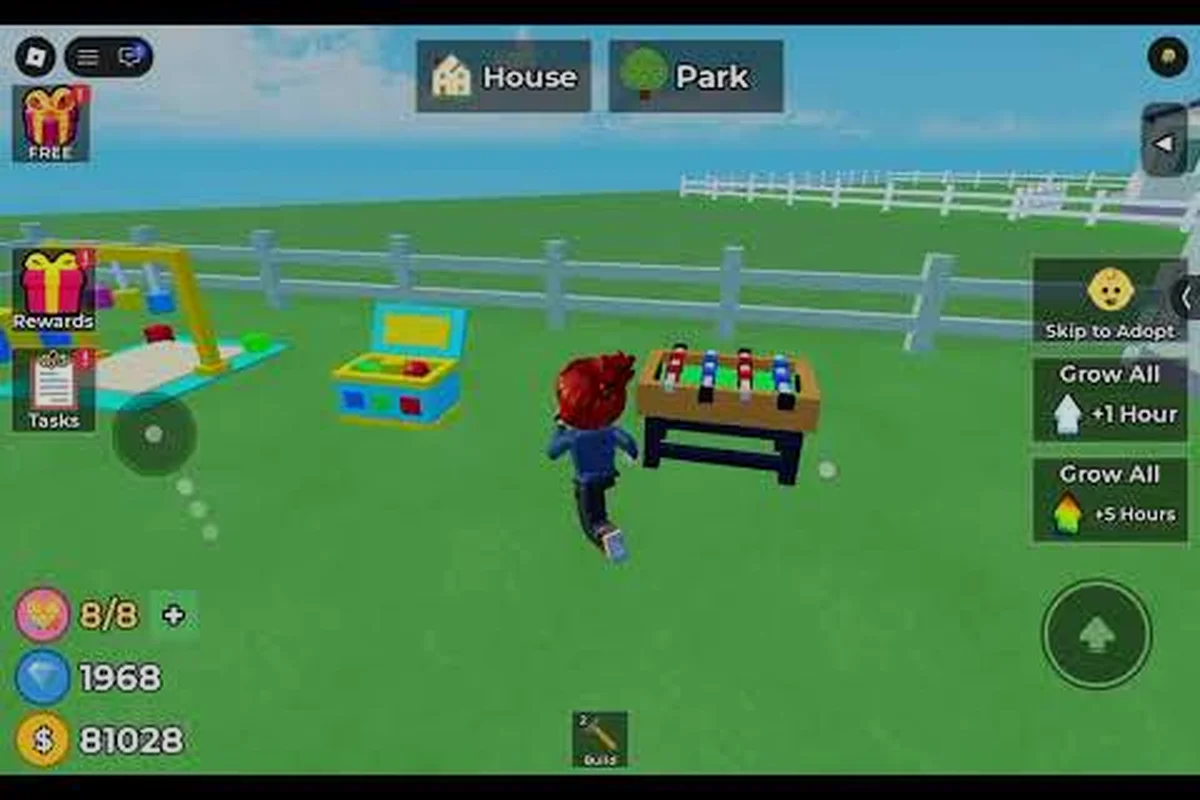
Raise The Biggest Family is it kid friendly? The short answer is usually yes for families who want supervised Roblox roleplay, though chat, player behavior, and purchases deserve a quick review before play. For younger children, family roleplay can work well because shared family bases and group activities create opportunities to practice teamwork and communication; however, an adult should still check the Roblox chat settings, use restricted-mode controls when available, and review whether in-game purchases or free-to-play items could lead to unexpected spending.
What Parents Should Know About Raise The Biggest Family
Raise The Biggest Family is a Roblox roleplay experience built around forming a household, earning money, caring for characters, and creating family-style stories. That premise can be engaging for children because it provides a low-pressure setting for pretending, cooperating, and experimenting with different responsibilities.
The strongest case for the game rests on its family-care theme and shared-server format. Rather than relying only on fast action, the experience centers on social routines that adults and children can discuss afterward. However, “family friendly” describes the intended setting, not a guarantee about every person in a public server.
Parents should understand three layers before approving play: first, the Raise The Biggest Family roleplay loop—forming a household, earning money, and caring for characters—offers a structured imaginative activity; second, a family-role server can encourage children to practice responsibilities together, such as assigning childcare or household jobs; and third, public-server behavior varies, so adult supervision and Roblox privacy settings remain necessary. For example, parents can join the same group roleplay, establish boundaries around chat and in-game purchases, and check which age controls are actually enabled before allowing independent sessions.
-
The game itself presents childcare, household, and family-role themes.
-
Roblox provides platform safety tools, but communication with other players remains unpredictable.
-
In-game purchases and progression may involve Robux, spending limits, and real-money transactions.
This review treats the game as a Roblox experience rather than judging it like a standalone family video game. The distinction matters because platform features, community behavior, and parental controls shape the actual experience as much as the in-game content.
Core Family-Friendly Features
The game’s central appeal is its focus on ordinary family activities. Players can adopt a family role, purchase or manage household necessities, and develop a story without needing advanced controls. The visual style also appears intentionally approachable, with a family-simulation concept that can be easier for younger players to understand than a complex competitive arena.
| Feature | Kid-friendly potential | Parent consideration |
|---|---|---|
| Family-household theme | Encourages nurturing and cooperative pretend play | Outcomes and dialogue may be broad or unpredictable |
| Roblox controls | Familiar interface for many young players | Chat and voice communication need supervision |
| Roleplay scenarios | Supports creativity and family storytelling | Players may invent inappropriate scenarios |
| Family progression | Provides goals beyond fighting or winning | Some progression options may require Robux |
| Public servers | Makes meeting other players easy | Server chat can contain inappropriate language |
This makes the game potentially useful as a shared creativity activity, but not as a substitute for parental involvement. For example, a parent could help children build a family-role scenario around buying groceries, caring for a pet, or managing a household budget, then discuss how fictional choices differ from real-life behavior. A child who understands that family roleplay does not determine what happens in the real world is likely to get more from the experience. Because public servers, chat, and voice communication can contain inappropriate language, adults should supervise communication, set Robux spending limits, and use private family servers or selective server filters where available.
How the 18-Player Server Shapes Play
The server format supports a group dynamic because up to 18 players can share one environment. That capacity can make household roleplay feel busier and more social, which is useful for Raise The Biggest Family group roleplay when everyone wants an active household.
At the same time, 18-player servers mean a parent cannot judge the entire session from the game’s family premise. A server may include helpful roleplayers, curious children, older users, or people using chat in ways that are not suitable for younger players. Private or friends-only games generally offer more control than a busy public server.
| Server condition | Best use | Main risk |
|---|---|---|
| Friends-only | Playing with known family members | Fewer people for roleplay |
| Private server | Larger family or class group | Server owner must manage access |
| Public server | Discovery and spontaneous interaction | Exposure to inappropriate chat |
| Parent-supervised session | Learning roles and discussing scenarios | Requires active monitoring |
For a first session, a private server or a small friends list is the safest route. It lets children learn the interface without making every stranger’s behavior part of the experience. For example, a parent could begin with two or three known children in a friends-only household, review controls and chat settings, then add one more player after confirming everyone understands the family roleplay. Compared with a public 18-player server, this arrangement reduces exposure to inappropriate chat and makes it easier for a parent to step in when players need help with roles or boundaries.
Kid-Friendly Gameplay Mechanics and Family Themes
The clearest positive feature is that the game rewards caregiving roleplay instead of presenting family life as purely chaotic. Players can take on roles, complete household objectives, and create shared routines. That structure can support imaginative conversations about responsibility, cooperation, and consequences without requiring parents to turn every session into a lesson.
Family themes alone do not determine the rating, though. Some roleplay servers may include dating, parenting conflicts, chores, money, or relationship drama. Younger players may interpret those situations differently from adults. The game is better suited to children who can distinguish pretend scenarios from real family conflict.
Household Roleplay Is the Main Appeal
The game’s strongest kid-friendly quality comes from how it turns routine actions into shared play. Players might cooperate on shopping, household management, childcare, or planning. These activities are simple enough for beginners, yet flexible enough for creative stories. Raise The Biggest Family roleplay with your family can resemble an improvised household game. Adults can establish boundaries around themes, while children choose characters and invent routines. The activity becomes more structured without losing the open-ended quality that makes roleplay appealing.
Caregiving scenarios are especially suitable for children because they emphasize attention and cooperation. They also give parents natural discussion points about sharing duties, making decisions, and considering another person’s needs. Those conversations work best when they remain light and do not turn every play session into a moral interrogation.
Communication and Player Behavior
Roblox’s chat and voice systems are the main variables. The game’s roleplay setting may encourage polite and cooperative conversation, but public servers also contain users who do not follow the same intentions. Children should be told in advance that they can ignore inappropriate comments and should tell a parent or guardian rather than answering them.
For younger players, disabling voice communication can reduce surprise and confusion. Text chat still requires oversight because players may use abbreviations, emojis, or roleplay lines that hide rude or personal remarks. Parents can also use Roblox account controls, parental controls, and chat settings to match the experience to the child’s age and maturity.
| Concern | Practical family response |
|---|---|
| Inappropriate language in chat | Use a private server and review chat settings |
| Unwanted private messages | Block and report; explain that strangers are not trusted contacts |
| Voice conversation | Begin with voice disabled or parent-only voice |
| Spending requests | Establish that no purchases happen without approval |
| Embarrassing roleplay | Pause, restate boundaries, and leave if needed |
The most effective safety rule is simple: family-friendly roleplay requires family-friendly boundaries. For Raise The Biggest Family, a private server should be paired with an adult-defined “family script”—for example, no dating, violence, pregnancy, or personal-information roleplay—so children know what to do if another player pushes those limits. Clear expectations reduce confusion and make it easier to block, report, or leave a server immediately; children should never feel pressured to continue a scene merely to avoid disappointing a roleplay partner.
Purchases and Progression
Roblox games can offer optional purchases, while the core activity remains available without spending. Parents should nevertheless check the experience’s current item and progression options before a child begins, because menus and prices may change. The game’s family-friendly presentation does not make every in-game purchase necessary or automatically appropriate.
Treat Robux spending like any other platform transaction: decide the budget beforehand, require adult approval, and avoid rewarding a child for asking repeatedly. The broader Roblox family-game comparison can also help adults weigh this title against alternatives with different social and purchasing structures.
Age-by-Age Family Suitability for Raise The Biggest Family
There is no single universal age rating for every family. Children’s readiness depends on reading ability, communication skills, sensitivity to mature themes, and how consistently an adult can supervise play. A game may work well for an older child with a parent present and feel unsuitable for the same child playing alone.
This guide offers a practical family assessment rather than an official age rating. When evaluating whether Raise The Biggest Family is kid friendly, consider how its roleplay systems shape real play: family roleplay can encourage imaginative scenarios, while public servers expose children to unexpected player behavior and mature themes. For example, a family joining a private server for a short session can practice collaborative storytelling with less exposure to strangers; by contrast, an unsupervised child entering a public server may encounter inappropriate chat or scenarios. Voice chat, stranger interactions, spending systems, and avatar-driven roleplay should therefore be reviewed alongside the child’s reading ability, communication skills, and supervision needs.
| Player profile | Suitability | Recommended setup |
|---|---|---|
| Ages 6–8 | Suitable with close supervision | Private server, voice off, short sessions |
| Ages 9–12 | Generally suitable | Friends-only or small family server, review chat settings |
| Ages 13–15 | Suitable with normal platform safety habits | Friends list, personal privacy and spending controls |
| Mixed-age family | Often workable | Adults model positive communication and set theme boundaries |
| Unsupervised younger player | Not recommended | Wait for a supervised first session and an age-appropriate account setup |
Raise The Biggest Family for kids works best when the game is treated as collaborative play rather than an unsupervised digital space. A child who understands that avatars are fictional and that strangers still need boundaries will generally have a safer and more enjoyable introduction.
Younger Players: Keep the Session Predictable
For younger children, predictability reduces friction. Start in a private server, explain the difference between taking care of a virtual character and controlling a real person, and establish a simple stop signal. Keep sessions short enough that the child can process what happened instead of becoming tired and less careful with chat.
Avoid joining crowded public servers merely because the game looks busy. A small household with family members or trusted friends gives younger players more opportunities to practice roles and less exposure to unpredictable behavior. It also makes it easier to notice if a particular activity produces frustration.
Older Players: Focus on Boundaries and Privacy
Older children may understand the difference between appropriate and inappropriate roleplay, but they still encounter unsolicited messages. Discuss which topics are off-limits, make clear that private conversations should stay private, and explain how to block or report troublesome players. Teen players can also gain from discussing how family-roleplay differs from real relationships. Ask them to notice whether a scenario shows negotiation, manipulation, teasing, or cooperation, then discuss healthy ways to resolve disagreements. The roleplay scenario guide offers a useful starting point for choosing age-appropriate story ideas.
How to Make Raise The Biggest Family Roleplay Safer for Kids
A family session becomes more manageable when parents treat it like any other shared activity: set the environment, agree on expectations, and stay nearby. Raise The Biggest Family roleplay with your kids does not require constant commentary. Instead, an adult can explain the boundaries briefly and remain available if a question or uncomfortable situation appears.
A Five-Step Family Setup
The first session should be short and familiarization-focused, ideally 15–20 minutes. Choosing a private server reduces variables, while a simple agreement gives everyone a shared understanding of acceptable play. For example, before joining a Raise The Biggest Family roleplay, each child could choose one family role, practice its character behavior, and complete a short family task. This keeps Raise The Biggest Family family friendly game sessions predictable while adults can observe whether its roleplay with your family settings match each child’s comfort level.
-
Create or join a private server with only approved players.
-
Review the account’s chat, voice, privacy, and spending settings before play.
-
Explain that characters are fictional, but real people still deserve respect.
-
Agree on family-role themes and behavior boundaries in plain language.
-
End the session briefly to ask what worked and what felt uncomfortable.
This setup can be repeated whenever a new person joins the Raise The Biggest Family roleplay with your family or kids group. Keep a visible family charter for the private server: each player’s chosen role, the character behavior they may perform, chat and voice limits, and the adult approval required for purchases. For example, a child playing a parent role can use family-themed conversations and complete a short household task, but cannot change another player’s role or invite outside players. Because Raise The Biggest Family group roleplay rules are visible rather than assumed from the title, adults can correct an issue immediately and help children connect character actions with real conduct expectations.
| Preparation area | What to do | Why it helps |
|---|---|---|
| Account | Review privacy and contact settings | Reduces exposure to unwanted contact |
| Server | Use private access where possible | Creates a controlled social environment |
| Communication | Set voice permissions by player age | Prevents unexpected voice contact |
| Spending | Establish a no-purchase-without-approval rule | Prevents impulse spending |
| Conversation | Set clear behavior boundaries | Gives children a way to evaluate interactions |
Choose Family-Centered Scenarios
Pick situations where every player can contribute rather than situations designed around one dominant character. Cooperative shopping, preparing for a new family member, organizing a household, or balancing chores can make participation easier. These ideas can be expanded through the group roleplay activity guide, which provides structured ways to involve different players.
Avoid adding romantic, provocative, or conflict-heavy material solely because the avatar system permits it. Younger groups benefit from scenarios with clear goals and low emotional complexity. If a child becomes uncomfortable, remove that theme without treating the request as a failure.
Supervise Without Interfering
Supervision does not require reading every message or directing every decision. Parents can remain in the room, check in at natural breaks, and explain that they can pause play if something feels strange. This balance preserves the imaginative quality of the game while giving children a reliable source of support.
Raise The Biggest Family roleplay with your kids can be especially useful when children practice negotiating roles with a trusted adult. The adult can model a healthy response by saying, “That character wants the room to themselves for a minute,” rather than taking control of the avatar.
Group Play Features and Parent Checklists
Group play is one of the game’s strongest attractions, but group size can magnify both the fun and the risks. Up to 18 players create enough room for a large household, yet one disruptive participant can affect the experience. The right approach is to regard group roleplay as a social activity requiring rules, not simply a larger game session.
Build the Right Player Group
For family and friends, use a private server and invite only people whose behavior the host trusts. For a group containing children and adults, assign one adult to monitor chat and another to guide gameplay when possible. Large parties work best when roles are distributed, because one child should not be expected to lead every interaction.
Raise The Biggest Family group roleplay becomes easier to manage when participants know the goal before joining. A shared plan prevents the server from becoming a collection of unrelated mini-games. Good goals can be modest: care for the household, complete a shopping list, organize a family event, or give every player a turn.
| Group size | Main advantage | Main challenge | Best control method |
|---|---|---|---|
| 2–4 players | Easy communication | May run out of ideas | Shared scenario |
| 5–8 players | Varied roles | Coordination becomes harder | Assign small tasks |
| 9–12 players | Lively group activity | Chat becomes difficult to monitor | Trusted players help host |
| 13–18 players | Large household feel | Greater chance of disruption | Private server and clear host rules |
Parent Checklist Before the First Session
A brief check reduces the need to react mid-session. Confirm who is joining, which communication tools are enabled, whether anyone can make purchases, and what happens if a player becomes uncomfortable. The family should also agree on a session length and where real-life responsibilities take priority.
| Check | Parent action | Why it matters |
|---|---|---|
| Server access | Prefer private or friends-only access | Controls who enters the household |
| Chat history | Know how to block and report | Provides a response to unwanted contact |
| Voice | Allow only trusted voices | Removes surprise interactions |
| Purchases | Require explicit approval | Keeps spending decisions with adults |
| Themes | Set family-appropriate limits | Reduces confusing or mature scenarios |
| Screen time | Schedule a stopping point | Prevents fatigue and rushed endings |
| Device security | Keep account credentials private | Protects purchases and communication settings |
Community reports can help identify recurring friction points in Raise The Biggest Family, such as unexpected chat messages, mature roleplay scenarios, or purchases made during a family session, but individual experiences vary. If community feedback conflicts with what your household sees, prioritize your child’s actual behavior and the current platform tools available to you. For example, if players report disruptive group roleplay while your child remains comfortable in a private server with trusted voices, keep that narrower setup; if your child shows discomfort, stop the session, review the chat and report tools, and adjust the family’s roleplay rules before trying again.
When to End a Session
Stop immediately if a player shares personal information, pressures another user, repeatedly ignores boundaries, or makes the child visibly uncomfortable. Leaving a server is not rude; it is a necessary safety response. Afterward, listen without interrogating the child and explain exactly what action will be taken.
A calm response teaches children that they are not responsible for handling inappropriate behavior. If someone repeatedly contacts a child privately, save relevant evidence where appropriate, block the account, report the behavior through the platform, and contact the child’s school or another relevant adult if the conduct seems coordinated or concerning.
Overall Kid-Friendly Verdict and Practical Alternatives
Raise The Biggest Family is it kid friendly? The game is generally kid friendly in its premise and family-oriented design, especially in a private server with adults or trusted friends. Its roleplay format gives children a reason to cooperate, practice responsibility, and build stories with relatives. Those strengths make it a reasonable candidate for family sessions rather than an adult-only roleplay experience.
The qualification is important: the game cannot control every public-server interaction. Parents should still review chat, voice, privacy, and spending settings; establish behavior boundaries; and remain available. If those safeguards are in place, the experience can be more wholesome than the name alone suggests.
| Overall factor | Rating | Reason |
|---|---|---|
| Core theme | Strongly positive | Focuses on households, care, and cooperation |
| Creative play | Strong | Supports roleplay and family stories |
| Social safety | Conditional | Depends heavily on server choice and supervision |
| Ease for children | Generally positive | Simple roleplay concept and familiar Roblox platform |
| Spending control | Conditional | Depends on account limits and family rules |
| Overall family suitability | Positive with safeguards | Best in private, supervised sessions |
Before a child plays, the family roleplay guide can help adults prepare characters, goals, and communication expectations. If the first session feels chaotic, reduce the server size or shift to a focused household task rather than adding more players.
Frequently Asked Questions
Is Raise The Biggest Family suitable for young children?
It can be suitable for young children when a parent or trusted adult supervises, especially in a private server with familiar players. Start with simple family scenarios, disable unexpected voice interactions, and explain that fictional characters should still be treated respectfully. Readiness depends more on the child’s maturity and communication skills than on the game’s family theme alone.
Can parents play Raise The Biggest Family with their kids?
Yes, family play is one of the format’s natural strengths. Adults can help children choose roles, set a shared household goal, and discuss how characters solve problems. Private servers make this easier because the group can control membership, themes, communication, and session length without dealing with unfamiliar public-server behavior.
Does Raise The Biggest Family include chat with strangers?
Like other Roblox experiences, it can include player communication features, and public servers may contain strangers. Roblox provides controls and reporting tools, but those do not make every interaction safe. Parents should use suitable chat and voice settings, prefer private servers for younger children, and establish clear rules about personal information, private messages, and leaving uncomfortable situations.
Is Raise The Biggest Family a family friendly game overall?
The game’s household, caregiving, and cooperation themes make it a family friendly game for many children under supervision. Its open-ended roleplay also means player-created scenarios can vary, so adults should remain involved and adjust the setup as children get older. Private family sessions offer the most dependable experience for younger players.