
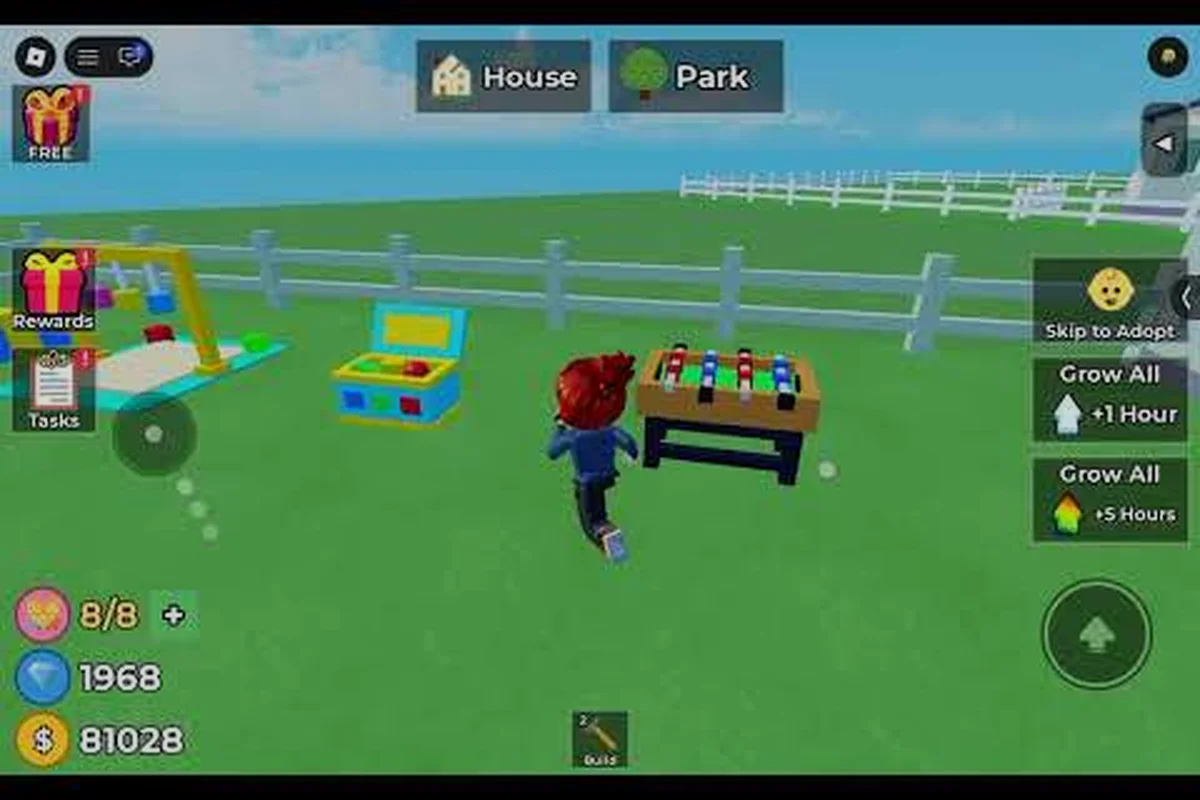
Raise The Biggest Family update history Roblox is easiest to understand through dated changes: the game launched October 13, then received another update on October 30. These early patches matter because they show the developers refining adoption routes, family balance, and general polish before the title settles into a stable rhythm.
Confirmed Dates in the Record
The official Raise The Biggest Family game page confirms the game’s release on October 13, 2026. Since the launch, the page records a further update on October 30, giving players a short but useful picture of the game’s early development cycle.
This initial timeline matters because a new Roblox release often changes during its first weeks. Developers can react to progression issues, confusing mechanics, or balance problems that only become clear once many players begin raising families. The October changes should therefore be read as early tuning, not as the final form of the game.
| Date | Confirmed milestone | What the available evidence indicates |
|---|---|---|
| October 13, 2026 | Public launch | The game became available on Roblox, beginning its first season of live operations |
| October 30, 2026 | Second recorded update | The most recent update timestamp indicates continued work on the experience shortly after launch |
| After October 30, 2026 | Unconfirmed period | No dependable date for another patch can be stated without a new official notice |
The launch date also sets the context for every later announcement. October 30 was only seventeen days after release, so the developers had limited time to gather feedback. That makes the update especially relevant to anyone interested in the title’s balance direction or adoption system.
What the October 30 Timestamp Confirms
The October 30 timestamp is the strongest confirmed date in the current record. It shows that the developers were still shipping changes during the opening month, while the absence of a detailed public changelog limits any claim about individual numbers or features.
Community reporting indicates that the early work focused on adoption-route tuning, family-size rebalancing, and general polish. These themes match the kind of adjustments a developer may make after launch, but they should not be mistaken for a complete list of every balance value changed.
| Confirmed fact | Reasonable interpretation | What remains unverified |
|---|---|---|
| Launch occurred on October 13 | The title began with a limited public history | Exact number of day-one bugs |
| Update landed on October 30 | The developers shipped changes during launch week | Individual patch-note wording |
| Adoption routes were tuned | Early progression may have become smoother or clearer | Exact multipliers, costs, or unlocks |
| Family size was rebalanced | Growth pacing may have been adjusted | Maximum family size and numeric caps |
| General polish was included | Presentation and usability received attention | Specific interface or visual changes |
For a closer look at individual additions and fixes, compare this timeline with the latest update overview. That page is especially useful when a player wants the present patch details rather than a chronological overview.
October 2026 Changes and Their Gameplay Impact
The Raise The Biggest Family October 2026 update appears centered on correcting systems that players encounter repeatedly. Because the game revolves around adopting, raising, and expanding a family, small changes to progression can affect how quickly a new account advances. The observed themes offer useful direction without pretending that unpublished numeric values are known.
Adoption-route tuning should reduce friction in the core loop. If a route required too many steps, cost too much, or presented unclear requirements, a patch could shorten that path. The change need not add a brand-new mechanic to improve the experience because clearer sequencing can make an existing system easier to understand.
Family-size rebalancing affects a different part of progression. The size of a family may influence income, management decisions, or the pace at which the household expands. Rebalancing during launch week suggests the developers were evaluating whether growth felt consistent for both new and returning players.
| System touched | Likely player-facing effect | Best way to verify in game |
|---|---|---|
| Adoption routes | Less friction or clearer progression | Compare the steps required for a new adoption |
| Family size | Changes to expansion pacing or rewards | Track household growth over equal sessions |
| General polish | Improved clarity, presentation, or usability | Check menus, prompts, and common actions |
| Overall balance | More consistent early progression | Compare income and progress milestones |
Players should test these systems on a fresh account and an established household. A new account can expose early-game friction, such as an adoption route’s hidden cost, unclear requirements, or a slow first expansion, while an established family may show whether family-size rebalancing changes income and progression pacing without disrupting an already developed household. Comparing equal sessions—one beginning with an empty family and one continuing from a larger household—helps separate genuine balance changes from the benefits of prior progression.
The closest companion resource is the added-features and bug-fix summary, which separates newly introduced content from corrections and refinements. That distinction is useful because “more content” and “better balance” can produce very different effects even when both arrive in the same patch.
A Practical Test for the Patch
Start with a newly created family and record the time required to complete the first adoption. Then repeat the same route while checking whether menus explain costs and requirements clearly. Finally, note the household’s growth rate over a fixed session, because a temporary boost can make one run feel very different from the next.
This method does not replace official patch notes, which were not available in the supplied record. It does, however, provide a repeatable way to evaluate the observed October 30 tuning in your own account. Make a short record of the route, the result, and any confusing prompt rather than relying on memory after several sessions.
Interpreting a Fast Launch Schedule
An update seventeen days after launch is not proof that every future patch will arrive on the same cadence. Early development usually moves quickly because feedback is fresh and the team can still adjust foundational systems. The safer conclusion is that October 30 represents one confirmed touchpoint, not a permanent weekly schedule.
Where the Next Content Update May Come From
The Raise The Biggest Family next content update does not have a dependable date in the available evidence. No official announcement in the supplied material identifies a future release day, and the October 30 timestamp is a completed deployment rather than a promise about the following patch.
Developers often use the first month after launch to refine the strongest demand. If players repeatedly ask for clearer adoption guidance, more varied household events, or a better explanation of progression rewards, those requests can influence the roadmap. They are still community priorities, not confirmed features, until an update notice or official post confirms them.
| Potential direction | Evidence level | Reason it may appear |
|---|---|---|
| More adoption options | Possible | Adoption-route tuning suggests this is an active system |
| Additional family events | Possible | Family growth is central to the game’s identity |
| Better progression explanations | Likely consideration | Clarity improvements can make early adoption easier |
| Rebalanced income | Possible | Family-size changes may affect overall pacing |
| Major new mode | Unconfirmed | No concrete source identifies one |
A useful distinction separates tuning, polish, and new content. Tuning changes numbers or requirements, polish improves presentation and usability, while new content adds a feature that did not previously exist. A timestamp alone cannot distinguish among them, which is why an official announcement is needed before labeling a rumored addition as released.
The update-schedule reference can help separate confirmed milestones from expectations as the game matures. Until then, treat social posts and server messages as provisional unless they link to the official game page or an established developer channel.
Signs a Notice Is Credible
A credible notice usually identifies the affected platform, gives a date or maintenance window, and describes changes in player-facing terms. Screenshots or short videos may accompany it, but a repost without a source adds little authority. Compare dates carefully because an old notice can circulate as if it describes the newest patch.
Confirmed notice: a dated announcement connected to the official experience. For Raise The Biggest Family, confirmation should trace to the game’s official Roblox page or its linked community channel, where the post date can be checked against the relevant Update History entry. If the announcement names a family, tower, or Roblox platform addition but its timestamp precedes that release, treat it as planning information rather than proof of a deployed update.
Community report: a player observation that may help identify a problem but does not establish the complete patch. For example, a screenshot claiming that Raise The Biggest Family added a new tower or family should be compared with the game’s current Update History entries, since a visual preview can show an unreleased or partially implemented feature. The report can flag what players are seeing—tower placement, rewards, or a Roblox platform feature—but the Update History remains necessary for confirming the full scope, release date, and whether the change is actually live.
Forward-looking roadmap: a possible intention that can change before release. For Raise The Biggest Family, a roadmap post may mention a planned family, tower, event, or Roblox platform feature without confirming that it has entered the live game. Treat details such as a tentative October 2026 release window, reward claims, or tower-placement previews as provisional until they appear in the game’s Update History or on its official Roblox page. This distinction matters because planned content can be delayed, renamed, rebalanced, or replaced before deployment.
Keeping those labels straight prevents a player from planning around a feature that has merely been discussed. It also makes the official Raise The Biggest Family community page more useful, since messages there can be evaluated against their source and publication date.
What the October News Centers On
The Raise The Biggest Family latest news available as of October 30 centers on one launch, one subsequent update, and three recurring development themes. That is a limited record, but it offers more value than repeating unsupported rumors. It shows an active first-month cycle without pretending the game already has a long, fully documented patch archive.
The Raise The Biggest Family game news also explains why some players may describe the October 30 release differently. Community reports emphasize adoption-route tuning and family-size rebalancing, while the official page supplies the dependable date. Combining the two produces a balanced picture: verified timing plus informed observations about what changed.
| Source type | Confirmed on October 30 | Useful for | Main limitation |
|---|---|---|---|
| Official Roblox page | Game identity, launch date, update timestamp | Verifying dates | Sparse detail about individual changes |
| Official community page | Developer-published notices when posted | Finding patch announcements | Messages may change over time |
| Player reports | Observed effects and confusing areas | Spotting balance trends | May omit context or use imprecise terms |
| Third-party discussion | Possible explanations and comparisons | Learning community sentiment | Can contain speculation |
The official game page is therefore the anchor for dates, while community reports help describe the player experience. Neither should be used to invent missing balance figures. If a route changes but the resulting numbers are not stated, record the before-and-after experience rather than presenting a guess as fact.
What Players Are Watching After the Patch
The main questions concern consistency. Players want adoption to feel understandable, family growth to feel rewarding, and the interface to explain what is happening. They also watch for whether the first month’s rapid tuning leads into a more predictable content cycle.
A compact feedback note can capture four items: the account’s starting point, the route tested, the visible result, and whether the change reproduced. This is more useful than simply labeling a build “overpowered” or “too easy,” because progression problems can depend on family size, income, or the number of adoption attempts already completed.
The broader game review context can also help distinguish a deliberate design choice from an update problem. If a mechanic felt unclear before October 30 but works cleanly after it, the review’s original criticism may no longer reflect the current build.
A Reliable Method for Tracking Future Roblox Updates
A dependable tracking routine combines official dates, in-game observation, and carefully labeled community reports. The Raise The Biggest Family update notice should be the starting point when one exists, but players can prepare a simple record now. A consistent method prevents old patch footage from being mistaken for a current feature.
Start by recording the current date and the visible version state. Next, list the systems recently changed, including adoption routes, family growth, rewards, and interface clarity. After each patch, repeat the same short sequence so the effect of tuning is easier to isolate.
| Tracking step | Record immediately | Why it matters |
|---|---|---|
| Confirm the update date | Official page or announcement | Establishes the correct version |
| Test a basic adoption | Steps, cost, and clarity | Measures core-system friction |
| Track family growth | Size and rewards after a fixed session | Reveals pacing shifts |
| Check visible bugs | Reproduction details | Distinguishes a real issue from confusion |
| Save evidence | Date, account state, and result | Prevents later memory errors |
Use the official news and developer-page guide to locate reliable sources before relying on an unnamed repost. It is particularly important to preserve the date of an announcement, because the same URL can later point to a newer message or event.
Avoid False Update Milestones
Three mistakes are common in early release coverage. First, a server restart may look like a content update even when only maintenance occurred. Second, a community suggestion may be repeated until it sounds confirmed. Third, a date shown on a video may refer to when it was recorded rather than when the patch went live.
Cross-check any important claim against the official game page and an announcement connected to the developer’s community space. If those sources do not confirm it, label the claim as unverified. That discipline is especially valuable when searching for Raise The Biggest Family update history Roblox information, where snippets from several months may appear side by side.
What the October Record Confirms—and What It Does Not
The Raise The Biggest Family update history Roblox currently begins on October 13, 2026, with the launch, and includes a confirmed update on October 30. Available reporting points to adoption-route tuning, family-size rebalancing, and general polish. No verified future release date or complete numeric changelog appears in the supplied evidence, so those details remain open.
That is the central takeaway of the October record: the game was still being actively refined during its first weeks, while the core direction remained focused on making family progression clearer and better balanced. The most responsible way to follow the title is to separate official timestamps from community observations and to test changes directly in the live experience.
Frequently Asked Questions
When did Raise The Biggest Family launch?
Raise The Biggest Family launched on October 13, 2026, according to its official Roblox page. The launch establishes the beginning of the game’s public update history. A further update appears on October 30, only seventeen days later, indicating that the developers were actively refining the experience during its opening month.
What changed in the October 30 update?
The October 30 update is confirmed by the official game page, while community reporting describes its themes as adoption-route tuning, family-size rebalancing, and general polish. A complete itemized changelog is not available in the supplied evidence, so specific costs, caps, or reward values should not be treated as confirmed without an official notice.
Is there a confirmed date for the next content update?
No dependable date is confirmed for the Raise The Biggest Family next content update. The October 30 deployment proves that updates were occurring during launch week, but it does not establish a weekly or monthly schedule. Check the official game page and developer community for any future announcement before relying on a community prediction.
Where can players find reliable game news?
The official Roblox game page and the developer’s Roblox community page are the strongest starting points for dates and announcements. Player reports can help reveal balance trends, especially around adoption and family growth, but they should be labeled as community observations until an official source confirms the exact change.
How can players tell whether the October patch improved progression?
Players can test the same adoption route and track family growth over an equal session before and after the patch. Recording steps, visible costs, rewards, and interface clarity provides stronger evidence than simply saying the game feels easier. This method is especially useful when comparing a new account with an established family.