
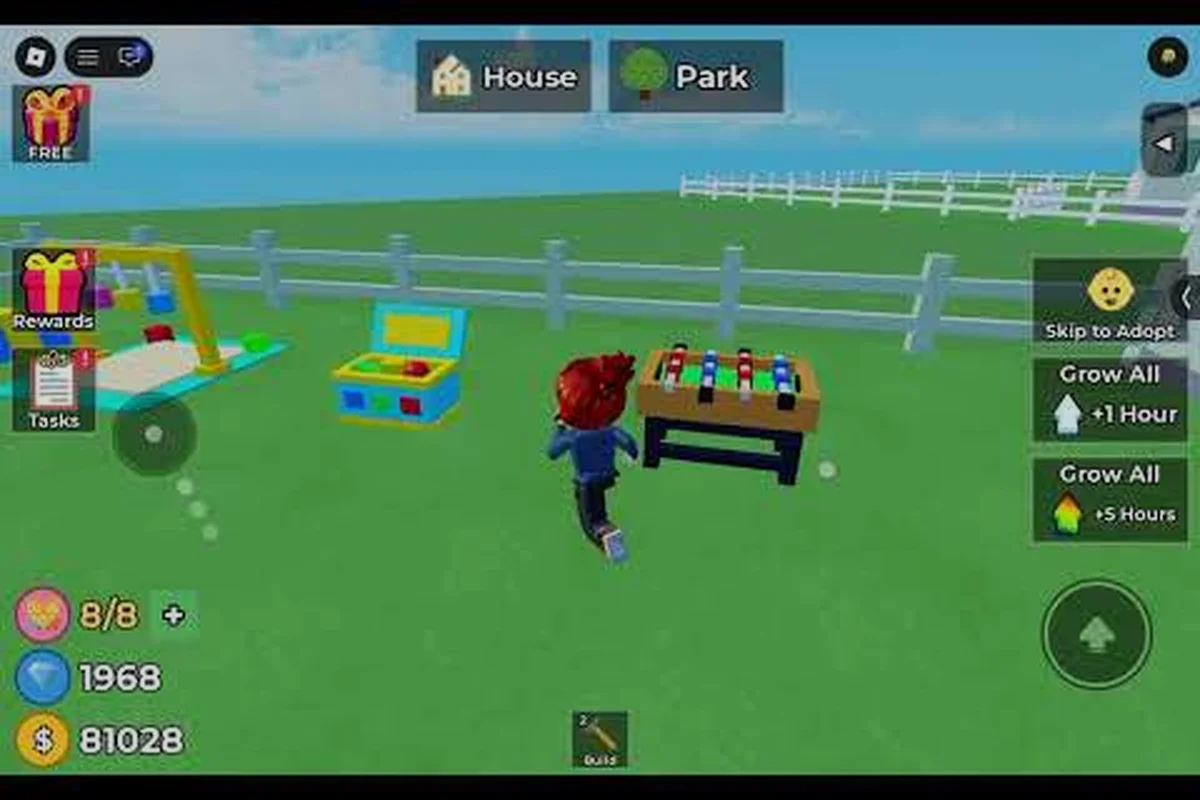
Raise The Biggest Family gameplay centers on becoming a parent: earn approval, pass the adoption interview, bring a child home, and handle daily care. The important part is the routine, because children continue aging while you are away. Decisions involving needs, approval, and available actions affect how quickly each child develops, so time management matters as much as choosing the right task.
Two Connected Gameplay Phases
Raise The Biggest Family gameplay has two connected phases. The first is an adoption process built around obtaining an Approval Letter, traveling to the adoption center, and passing an interview. The second is family life, where feeding, bathing, and other care tasks determine whether the household stays healthy and stable.
This structure matters because the game is about more than completing a single objective. A successful adoption begins a longer responsibility loop. A Raise The Biggest Family gameplay video by Mr Red Dangerous illustrates that sequence, showing adoption first and routine care afterward.
| Phase | Primary Goal | Key Task | End State |
|---|---|---|---|
| Approval | Become eligible to adopt | Obtain the Approval Letter | Interview access |
| Interview | Prove family readiness | Attend and complete the interview | Adoption approval |
| Adoption | Meet the child | Travel to the adoption center | Child comes home |
| Daily care | Maintain the household | Feed, bathe, and provide care | A growing family |
From Approval to Adoption
The adoption route is sequential, so skipping ahead is usually less efficient than completing each requirement in order. Secure the Approval Letter, drive to the adoption center, and complete the interview before attempting to bring a child home. This order gives you a clear sense of progress and prevents you from searching for an adoption solution before the game has established eligibility.
Players who want a cleaner first session can use the Raise The Biggest Family beginner guide to map the opening objectives before chasing optional tasks. The fastest route is still the one that follows the current objective marker and confirms each checkpoint.
Post-Adoption: From Permission to Routine
The post-adoption phase changes the emphasis from collecting permission to maintaining a household. Feeding and bathing are central actions, but they are part of a larger care rhythm. Missing a need for too long can interrupt development, while completing the routine consistently keeps the child’s daily status under control.
The useful distinction is between a short task and a recurring duty. Washing the child once moves an immediate need forward; feeding, bathing, and checking on the child again becomes a schedule. That shift is what makes the game’s progression feel like family management rather than a single adventure sequence.
Controls Grouped by Purpose
The controls are most useful when grouped by what they accomplish. Movement and vehicle actions help you travel, while household actions let you interact with children and objects. Because the game combines driving with close-range care, learning when to move and when to interact prevents avoidable delays.
| Action Category | Purpose | When It Matters Most |
|---|---|---|
| Movement | Position the player near people and objects | Before feeding, bathing, or interviewing |
| Vehicle control | Travel between home and the adoption center | During approval and adoption objectives |
| Interaction | Select an eligible child or household object | When a care prompt appears |
| Interview action | Respond during the adoption meeting | Before adoption can be completed |
| Care actions | Feed and bathe the child | Throughout daily progression |
Moving and Interacting
Use movement to place yourself close enough to the relevant character or object, then activate the interaction prompt. This basic sequence is easy to understand, but it becomes important in crowded scenes because pressing an action while positioned incorrectly may produce no result.
A practical rule is to center the character before interacting. If the prompt does not appear, adjust your position instead of repeatedly pressing the action. This keeps Raise The Biggest Family controls predictable and saves time when several household elements are close together.
Driving and Navigation
Vehicles play a direct role in the adoption process. You must reach the adoption center with the required approval, so leaving on foot only adds unnecessary travel. Use the route shown by the current mission and avoid detouring until the interview is complete.
For a more detailed look at progression, the main gameplay loop guide explains how travel objectives connect to care tasks. The main advantage of using the vehicle is that it preserves momentum between separate locations in the core loop.
Interview and Care Prompts
Adoption interviews require active participation, while feeding and bathing demand proximity and repeated interaction. The Interview is a one-time step toward completing the adoption process, but Feed and Bath are recurring objectives that restore the child’s food need and hygiene as those needs return. Because both care actions depend on prompts, players should respond promptly rather than treating them as optional background tasks; Check Child can then reveal the child’s current condition and guide the next care action.
| Prompt Type | Objective | Repetition |
|---|---|---|
| Approval Letter | Unlock the route to adoption | One-time requirement |
| Interview | Complete the adoption process | One-time requirement |
| Feed | Restore the child’s food need | Recurring |
| Bath | Clean the child and handle hygiene | Recurring |
| Check Child | Review the child’s current condition | Flexible |
Core Care Mechanics and Daily Routine
Care mechanics create the strongest contrast between the early game and the endgame. Adoption has a visible finish line, while daily care requires repetition. The child keeps aging even when the player is offline, according to the gameplay source, so returning after a break should begin with a status check rather than another full orientation.
| Care Priority | Immediate Need | Player Action | Best Timing |
|---|---|---|---|
| Food | Prevent hunger from worsening | Feed the child | As soon as the prompt appears |
| Hygiene | Maintain cleanliness | Bathe the child | During the daily routine |
| General condition | Check development and needs | Inspect the child | After essential tasks |
| Household readiness | Keep care running smoothly | Return home | Before needs accumulate |
Preventing Care Conflicts With Optional Play
A reliable routine prevents care tasks from competing with optional activities. Feed first, bathe next, and then check the child’s condition. This order addresses basic needs before you spend time on travel or errands, which is especially helpful when returning from an offline break.
The First-Round Care Check is a simple mental model: after each outing or offline break, prioritize the child’s immediate needs before optional gameplay activities. Feeding and bathing should come first because unmet needs can disrupt attention and increase the risk of missed requests later. For example, if hunger and hygiene are both pending, complete the feeding check before bathing, then reassess which request remains urgent. This quick order prevents errands or travel from taking priority over essential family management.
-
Check the child’s status as soon as you return.
-
Address hunger and hygiene before leaving the house.
-
Repeat the routine at regular intervals instead of waiting for visible failure.
-
Finish with a quick condition review so no request remains overlooked.
Handling a Busy Household
As the family grows, attention becomes more divided. One child may need food while another needs bathing, and the player may be away from home when a request appears. This makes prioritization essential. Handle urgent bodily needs first, then return to less time-sensitive activities.
Players who want a compact reference can consult the quests and tasks guide for a daily checklist. Keep the routine visible, but adapt the order to the household’s current needs rather than treating every task as equally urgent.
Care Mistakes to Avoid
The most common mistake is letting the player spend time outside the home while basic needs remain unresolved. Another is assuming adoption automatically creates a complete routine. After bringing the child home, test feeding and bathing immediately so you know where the interaction points are.
Treat the first few minutes at home as a diagnostic run rather than a tour: switch among feeding, bathing, comfort, and attention prompts while the child is beside you, and watch how the interaction meter responds. For example, begin a feeding action, pause before completion, then test whether bathing from the same position remains available; if a prompt disappears, your character may have shifted out of range. This quick check exposes early routine problems before they compound, making subsequent care tasks, objectives, and household pacing much easier to manage in Raise The Biggest Family.
-
Leaving immediately after adoption without checking the child’s status.
-
Driving to an objective while a basic need is still waiting.
-
Repeating an action because the character is not close enough to interact.
-
Skipping a condition check after an offline break.
The Endgame After First Adoption
The endgame is not defined by one final button. It is the stage where approval and the first adoption have been completed, and the player manages an established household. At this point, the Endgame Responsibility Loop becomes more important: monitor needs, organize travel, and maintain the family’s condition over time.
| Stage | Main Focus | Typical Activity |
|---|---|---|
| Early setup | Approval Letter and interview | Prepare for adoption |
| Adoption | Bring the child home | Complete the family transition |
| Early care | Learn prompts and timing | Feed, bathe, and check in |
| Stable household | Maintain repeated routines | Balance home and outside tasks |
| Endgame | Continue development and care | Preserve the long-term family loop |
What Changes in the Endgame
In the early game, objective completion provides most of the direction. During the endgame, the player already understands the main actions, so attention shifts to consistency and family size. Multiple children can create overlapping demands, and each visit to the home may involve a different sequence of needs.
Community-reported progression can vary by game version, so unverified numerical thresholds should not be treated as fixed facts. The dependable pattern is clearer: children age, their needs recur, and the player’s response affects household stability. For example, delaying a needed home visit can allow one child’s demand to overlap with another’s, whereas visiting promptly may prevent a small routine from cascading into a larger family-management problem.
Long-Term Planning
Make the adoption center part of a planned trip rather than an abrupt interruption. Before leaving, complete urgent care actions and note which needs may return while you are away. Once you return, resume the same sequence instead of exploring unrelated activities.
Dividing the session into three blocks makes the endgame easier to manage because each block has a defined finish line: complete the active approval, interview, or travel requirement; handle the household’s immediate care needs; then return and inspect for anything that changed during the trip. For example, if a child’s feeding, bathing, or inspection task can accumulate needs while you are away, the return block gives those demands a planned checkpoint instead of forcing you to react mid-route. This structure also helps preserve the child’s continued aging, since regular household checks can catch new needs before they become harder to address.
-
Preparation: Finish the current approval, interview, or travel requirement.
-
Household block: Feed, bathe, and inspect children before leaving.
-
Return block: Check the family again and address anything that accumulated during the trip.
A three-block routine also protects the aging progression during the endgame: if a child advances to the next age stage while you are completing an approval, interview, or travel requirement, the return-block inspection lets you catch age-specific requirements such as feeding, bathing, or health checks before they compound. For example, a child who ages during a long adoption-center trip may need immediate care, so checking the household state before starting another approval prevents avoidable delays. This keeps each gameplay task tied to the family’s changing needs while reducing the need to monitor every mechanic constantly.
Practical Gameplay Strategies for New Players
New players benefit from a deliberate first-hour plan. Learn the movement and interaction prompts in a safe place, secure the approval requirement, and only then concentrate on travel and interviews. Once adoption is complete, switch from mission-driven play to routine-driven play.
| Priority | Action | Reason |
|---|---|---|
| 1 | Learn movement and interaction | Prevents repeated failed inputs |
| 2 | Obtain approval | Unlocks the adoption route |
| 3 | Attend the interview | Advances the main objective |
| 4 | Bring the child home | Starts the care phase |
| 5 | Practice feeding and bathing | Establishes the daily routine |
| 6 | Check needs after breaks | Accounts for aging while offline |
The First Session
Begin by confirming how the character moves and which prompts appear around household objects. Then follow the objective chain toward the Approval Letter. Driving is useful here because travel is part of the adoption process, but the first session should not become a series of random detours.
After the interview, complete the adoption trip and return home, then prioritize the feeding and bathing prompts as soon as they appear. Responding to these needs builds the child’s condition and signals that the household routine is functioning, while missed opportunities can leave the character hungry, dirty, or unsettled. Establishing this balance before the family expands makes the later childcare demands easier to manage and helps preserve the Approval Letter progression.
For a task-by-task opening, use the starter guide alongside this overview. The combination gives you both the sequence and the reasoning behind each step, including how movement prompts, household-object interactions, driving, and the Approval Letter objective chain fit together. That structure is especially useful before adding family members, because it helps you distinguish essential care actions from optional detours and establish a manageable routine for feeding, bathing, and travel.
Active Play Versus Offline Aging
Children continue aging while you are offline, so short, regular sessions can be easier to manage than infrequent long sessions. The key is not to panic if a need has already returned; instead, work through it immediately and restore a stable baseline.
Do not treat offline progression as a freeze-frame. In Raise the Biggest Family, family members can continue their reported care routine while you are away, and needs may reappear before you return. Use a return-and-check step after each break: review the current family status, confirm which needs are active, and handle them before opening optional tasks. This keeps the household from drifting toward a neglected baseline and prevents a temporary return of hunger, fatigue, or illness from turning into a larger recovery problem.
Keeping the Routine Simple
A three-part routine is enough for early play: feed, bathe, and check the condition. Add more detailed priorities only when the household requires them. Overcomplicating the schedule can cause you to miss obvious prompts, especially when several activities become available together.
| Routine Step | What It Resolves | Why It Belongs in the Rotation |
|---|---|---|
| Feed | Hunger and food need | Prevents a basic need from worsening |
| Bath | Hygiene | Maintains the child’s condition |
| Condition check | Remaining requests | Reveals what needs attention next |
| Short home break | Recovery time | Creates room for the routine to settle |
Frequently Asked Questions
What is the main Raise The Biggest Family gameplay loop?
The main loop begins with earning approval, traveling to the adoption center, and passing an interview. After bringing a child home, you feed, bathe, and check on them while they continue aging over time. The progression shifts from completing adoption objectives to managing recurring household responsibilities.
How do the Raise The Biggest Family controls work?
Movement positions your character near a person or object, and an interaction prompt activates the relevant action. Vehicles handle travel between locations, especially during the approval and adoption stages. Approach the target carefully, center your character, and then use the prompt for interviews, feeding, or bathing.
Do children continue aging when the player is offline?
Yes. Gameplay information confirms that children continue aging while the player is away, so returning to the household functions like a catch-up check rather than a free pause. Inspect each child’s condition first, then resolve urgent hunger or hygiene needs before opening optional activities; for example, feeding a child whose needs meter has declined can prevent an avoidable care setback while the family’s time-management system resumes.
What should players prioritize in the Raise The Biggest Family endgame?
The primary priority is maintaining a stable care routine. Feed and bathe children when needed, check their condition after returning from a break, and organize travel around the household’s current demands. As the family grows, overlapping needs make consistent status checks more valuable than assuming every task takes equal priority.
Is adoption the only major objective in Raise The Biggest Family?
No. Adoption is the central early objective, but it leads into a longer family-management cycle. The Approval Letter and interview lead to bringing a child home, after which feeding, bathing, condition checks, and continued child development determine the day-to-day experience.